English
info@munera.ca 1-877-366-7589

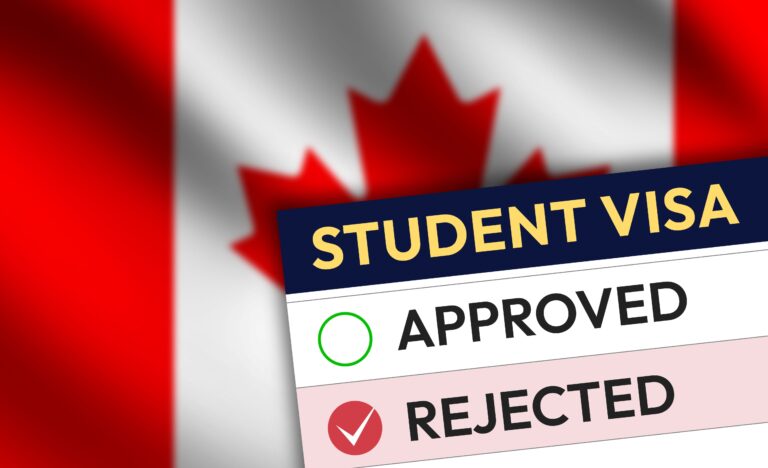
Pilot Project to Expedite Judicial Review for Rejected Student Visas

Written by Munera Lawyers

On October 1, 2024, the Federal Court of Canada launched a pilot project aimed at streamlining the judicial review process for rejected study permit applications. This new initiative, called the Study Permit Pilot Project, is expected to deliver resolutions within five months, significantly reducing the typical 14-18-month wait time for judicial review.

Pilot Project Goals and Eligibility Criteria
The Study Permit Pilot Project aims to reduce procedural steps and avoid the need for hearings. To participate in the Pilot Project, applicants must meet several criteria:

  1. Rejected Study Permit: The applicant’s study permit application must have been denied.
  2. Consent from Both Parties: Both parties agree to opt in to the Pilot Project.
  3. Agreement on Facts: The facts of the case must be undisputed and supported by the application materials and the IRCC’s reasons for the decision.
  4. Non-Complex Cases: The case must not involve complex issues such as inadmissibility, national security concerns, or requests for certified questions.
  5. Timeliness: The applicant cannot request an extension to file the Application for Leave.
  6. No Affidavits: Affidavits will not be submitted by either party.
  7. Simplified Tribunal Record: IRCC must provide a Simplified Certified Tribunal Record to support the review.

This streamlined approach allows for cases to be reviewed quickly, benefiting both the applicants, who face tight timelines to pursue education in Canada, and the Federal Court, which seeks to allocate its resources efficiently.

Key Procedural Changes under the Pilot Project
The Study Permit Pilot Project introduces several major procedural modifications to accelerate the judicial review process:

  1. No Hearings Required: Applicants and IRCC officials will not be required to attend hearings, thereby reducing both the time and costs for all parties involved.
  2. Simultaneous Determination of Leave and Merits: Typically, the Court first decides on whether to grant leave to the applicant before proceeding to hear the merits of the case. This Pilot combines the request for leave and judicial review processes, enabling the judge to assess both aspects simultaneously.
  3. Shortened Timeline: With these modifications, cases are expected to reach a decision within five months, a significant reduction compared to the previous timeline.

The Pilot Project is essential to address the increasing backlog of study permit cases. For many international students, delays in the court process can lead to lost university placements, forfeited scholarships, or missed critical deadlines. By streamlining the process, the Federal Court aims to lessen students’ financial and emotional strain and help them obtain timely resolutions. However, not all accepted applications will qualify for the Pilot Project. Students with cases involving more intricate legal issues may still face extended timelines.

The Federal Court’s Study Permit Pilot Project marks a meaningful step toward addressing the growing volume of immigration cases and enhancing the judicial review process for international students.

Canadian Government Announces Changes to Work Permits under the Temporary Foreign Worker Program

Written by Munera Lawyers

The Canadian government has announced new changes to the Temporary Foreign Worker Program (TFWP), set to take effect in two phases on October 28, 2024, and November 8, 2024. These reforms are designed to enhance the integrity of the program and ensure that employers who rely on foreign talent adhere to stricter requirements. For employers, foreign workers, and the broader Canadian labour market, these changes could have significant implications.

Effective October 28, 2024: New Business Legitimacy Requirements

Starting October 28, 2024, employers using the TFWP will face new standards to prove the legitimacy of their business operations. Previously, businesses could submit attestations from accountants or lawyers to demonstrate their legitimacy. However, under the new rules, such attestations will no longer be accepted.

Instead, the government will rely on information-sharing agreements with provincial and territorial authorities, as well as existing employer registries, to verify whether a business is legitimate. This change is part of an effort to reduce misuse of the TFWP, prevent fraud, and ensure that only genuine employers with valid job offers are able to access foreign labour through the program.

For employers, this means increased scrutiny and a higher burden of proof to demonstrate compliance with the program requirements.

Effective November 8, 2024: Higher Wage Thresholds for the High-Wage Stream

As of November 8, 2024, employers seeking to hire foreign workers through the TFWP’s high-wage stream will need to offer significantly higher wages. The new wage requirement will mandate that employers pay foreign workers at least 20% higher than the current median wage in the relevant province or territory.

This change represents an hourly wage increase of between $5 and $8 per hour, depending on the region, and is aimed at ensuring that foreign workers in high-wage jobs are compensated more competitively to prioritize the hiring of domestic workers. Jobs that fall below this wage threshold will be reclassified under the low-wage stream, which comes with increased employer responsibilities related to housing, transportation, and the recruitment of workers already in Canada.

Employers relying on foreign talent should prepare for these new requirements to remain eligible under the TFWP and continue accessing the foreign labour necessary to meet their business needs.

Canada Implements Reforms to Manage International Student Program

Written by Munera Lawyers

Immigration, Refugees and Citizenship Canada (IRCC) has implemented new reform mechanisms for the International Student Program. These adjustments aim to address the unsustainable growth of the International Student Program while ensuring a positive experience for students and supporting Canada’s sustainable population growth and system integrity.

1. Cap and Provincial Attestation Letter

Effective January 22, 2024, most new post-secondary international students will be required to provide a Provincial Attestation Letter (PAL) from a province or territory with their study permit application. This PAL serves as evidence that the student is accounted for under a provincial or territorial allocation within the national cap. Applications received without a PAL will be returned, unless exempt.

Exemptions to this requirement include:

  • primary and secondary school students;
  • master’s or doctoral degree students;
  • visiting or exchange students;
  • in-Canada study permit and work permit holders (includes study permit holders applying for an extension);
  • in-Canada family members of study permit or work permit holders; and
  • students whose application was received by IRCC before 8:30 a.m. ET on January 22, 2024.

Provinces and territories are required to have a plan in place for issuing PALs by March 31, 2024.

2. Post-Graduation Work Permit (PGWP) Update for Master’s Degree Graduates

Starting February 15, 2024, graduates of master’s degree programs that are less than two years in length will be eligible for a three-year PGWP, provided they meet all other eligibility criteria. In addition, individuals graduating from programs that are at least two years in length at PGWP-eligible designated learning institutions will also be eligible for a 3-year PGWP.

The length of PGWP for other programs, will continue to align with the length of the study program, up to a maximum of 3 years

3. PGWP Eligibility for Public-Private Partnership College Programs

To address concerns about the quality of education and student support in public-private partnership college programs, restrictions on PGWPs for these institutions have been implemented. While current international students enrolled in these programs remain eligible for a PGWP, new students enrolling in such programs will not be eligible for a post-graduation work permit.

4. Changes to Open Work Permit Eligibility for Spouses

Updates to the eligibility criteria for open work permits for the spouses and common-law partners of international students are forthcoming. Under these changes, eligibility will be limited to spouses and partners of students in graduate and professional degree programs only. Spouses of students in undergraduate and college programs will no longer be eligible for an open work permit unless they already hold one under this stream.

Entry Programs: Express Entry, Federal Skilled-Trades, Provincial Nominee Program, Family Sponsorship

Express Entry…

is a way for skilled workers to immigrate and become permanent residents of Canada. The Express Entry system manages three types of immigration programs within it. The first is the Canadian Experience Class (CEC) which is for skilled workers who have three years of experience in the Canadian workforce prior to applying. The second program is the Federal Skilled Worker Program (FSWP) which is a way for skilled workers with foreign experience to immigrate and become permanent residents of Canada. The third is the Federal Skilled Trades Program (FSTP) which is for skilled workers who have experience and are qualified in a skilled trade to become permanent residents of Canada.

In the Express Entry system, an electronic system is used to manage the applications of skilled worker applicants. Eligible applicants are accepted into the Express Entry pool and are subject to ranking according to the federal government’s Comprehensive Ranking System (CRS), which is a points-based system used to assess and rank applicants based on an applicant’s age, education, work experience, language skills, and many other factors. Based on an applicant’s CRS score, the specific Express Entry program, and the country’s current economic goals, the IRCC will select and invite the highest-scoring applicants with an Invitation to Apply (ITA) for permanent residence.

To be eligible for Express Entry, an applicant must meet the requirements of at least one Express Entry program, and they must complete language testing for writing, reading, listening, and speaking Canadian languages.

If an applicant receives an ITA for permanent residence from IRCC, the applicant must submit a completed Application for Permanent Residence to IRCC within the specified deadline. The application will need to include the applicant’s medical exam and police certificate. The applicant will also be required to submit biometrics once IRCC requests it. The IRCC will then review and make a final decision on the Application for Permanent Residence, and if approved, the applicant will receive Confirmation of Permanent Residence (COPR).


The Provincial Nominee Program (PNP)…

is a program for foreign nationals who have the skills, education, and background that can contribute to the working economy of a specific province or territory in Canada (save for Quebec), and who want to live in that specific territory or province and become permanent residents of Canada. Provinces and territories each have their own requirements and different immigration programs under PNP that can target specific types of foreign nationals such as students, skilled or semi-skilled workers, and business people, depending on the needs and goals of the province or territory. Applicants to the PNP may or may not need to apply using the aforementioned Express Entry process, depending on their eligibility for Express Entry and the program. If the applicant applies to a PNP that is processed through the non-Express Entry process, the processing time will be longer than through Express Entry. For all PNP applications, the applicant will need to pass a medical exam and will need to obtain a police check certificate for processing prior to the IRCC considering the issuance of an ITA for permanent residence. The applicant must then submit a completed Application for Permanent Residence to IRCC within the specified deadline.


Family Sponsorship Programs…

are characterized by a Canadian citizen, permanent resident or person registered in Canada as an Indian under the Canadian Indian Act, sponsoring certain eligible family members to work, live, or study in Canada as permanent residents. The IRCC has two main streams of Family Sponsorship which include the parent and grandparent sponsorship program and the spousal, partner, child or other relative stream. The requirements and process differ depending on the relative which is to be sponsored (the principal applicant); however, the intended sponsorer must always apply to become a sponsor and the intended sponsee(s) must apply to become permanent resident(s) at the same time. To be eligible to sponsor, the sponsor must be at least 18 years old of age, must prove that they are not receiving social assistance from the government (for reasons other than a disability), and must demonstrate that they can provide for the basic needs of any relative(s) they wish to sponsor. There may be an income requirement and a financial undertaking forming a binding sponsorship agreement. There are also various restrictions on who can sponsor a relative to immigrate to Canada. This is one of the reasons it is always a good idea to speak with and seek legal advice from a professional familiar with current and evolving immigration laws and policies.


  1. Government of Canada, Eligibility to apply for the Federal Skilled Trades Program (Express Entry) (August 25, 2023), online: Immigration and Citizenship <https://www.canada.ca/en/immigration-refugees-citizenship/services/immigrate-canada/express-entry/eligibility/skilled-trades.html>
  2. Government of Canada, How Express Entry Works (August 23, 2022) online: Immigration and Citizenship <https://www.canada.ca/en/immigration-refugees-citizenship/services/immigrate-canada/express-entry/works.html>
  3. Government of Canada, How the Provincial Nominee Program (PNP) works (August 22, 2023) online: Immigration and Citizenship <https://www.canada.ca/en/immigration-refugees-citizenship/services/immigrate-canada/provincial-nominees/works.html>
  4. Government of Canada, Sponsor your family members (September 22, 2023), online: Immigration and Citizenship <https://www.canada.ca/en/immigration-refugees-citizenship/services/immigrate-canada/family-sponsorship.html>


NOTE: This article has been written for general information purposes only and does NOT constitute legal advice. For further questions and/or legal advice please consult a qualified lawyer.

MUNERA Successful at the Court of Appeal in Cross-Jurisdictional Commercial Litigation Matter

Congratulations to MUNERA’s Litigation department for successfully arguing at the Ontario Court of Appeal, in favour of Ontario’s jurisdiction on a matter involving out-of-province parties doing business in Ontario.

GIAO Consultants Ltd. v. 7779534 Canada Inc. et al, 2020 ONCA 778

HUMAN RESOURCE, LABOUR AND OCCUPATIONAL HEALTH & SAFETY

MUNERA PC has partnered with The Ministry of Economic Development, Job Creation, and Trade to discuss key developments in government programs and the law that are crucial considerations for employers as Ontario returns to work.

Read More:https://www.haltech.ca/event/human-resource-labour-and-occupational-health-safety/?fbclid=IwAR3bLFLH3FzCiIFl4s8IX-N75c02N8qjZTTQTGlAi3XKY3oSL0H9j5IW7kI

MUNERA interviews with the Toronto Star

Toronto Star Article about MUNERA’s latest positive outcome at the Federal Court of Canada addressing the unreasonableness of IRCC in assessing Humanitarian and Compassionate Grounds in a permanent residence application under the Live-In Caregiver Program.

Judge rips immigration officials who blamed a Toronto nanny for their mistakes — then said losing her would help kids’ emotional ‘growth’

MUNERA at the Federal Court of Canada

Congratulations to MUNERA’s Litigation and Immigration departments. Their advocacy and overall great performance at the Federal Court of Canada secured a successful Judicial Review decision at Balarezo v. Canada (Citizenship and Immigration), 2020 FC 841. MUNERA’s successfully argued the unreasonableness of IRCC in assessing Humanitarian and Compassionate Grounds in a permanent residence application under the Live-In Caregiver Program.